

Ahkam-e-Mayyit (أحکامِ میت)
Comprehensive Islamic Funeral Guidelines according to Hanafi Jurisprudence
Introduction
مقدمہ
In Islam, every Muslim has rights over another Muslim, both during life and after death. Among these rights are washing the deceased (Ghusl), shrouding the body (Kafan), offering the Janazah prayer, and arranging the burial according to Islamic teachings.
These acts are considered Fard Kifayah (Collective Obligation). If some Muslims fulfill this responsibility, the obligation is lifted from the rest of the community. However, if no one performs these duties, the entire community bears responsibility.
Karachi Funeral Service follows the guidance of the Holy Qur’an, the Sunnah of Prophet Muhammad (صلى الله عليه وسلم), and Hanafi Islamic Jurisprudence to provide funeral services with dignity, respect, privacy, and compassion.
These acts are considered Fard Kifayah (Collective Obligation). If some Muslims fulfill this responsibility, the obligation is lifted from the rest of the community. However, if no one performs these duties, the entire community bears responsibility.
Karachi Funeral Service follows the guidance of the Holy Qur’an, the Sunnah of Prophet Muhammad (صلى الله عليه وسلم), and Hanafi Islamic Jurisprudence to provide funeral services with dignity, respect, privacy, and compassion.
اسلام میں ہر مسلمان کے دوسرے مسلمان پر زندگی میں بھی اور وفات کے بعد بھی حقوق ہیں۔ ان حقوق میں میت کو غسل دینا، کفن پہنانا، نمازِ جنازہ پڑھنا اور اسلامی طریقہ کے مطابق تدفین کا انتظام کرنا شامل ہیں۔ یہ تمام اعمال فرضِ کفایہ ہیں۔ اگر چند مسلمان یہ ذمہ داری ادا کر دیں تو باقی تمام مسلمان بری الذمہ ہو جاتے ہیں، اور اگر کوئی بھی ادا نہ کرے تو پوری کمیونٹی گنہگار ہوتی ہے۔
Virtues of Ghusl and Kafan
فضائلِ غسل و کفن
Serving a deceased Muslim is a great act of worship. The Messenger of Allah (صلى الله عليه وسلم) encouraged Muslims to honor the deceased with respect, sincerity, and dignity. Washing the deceased, shrouding them, offering the funeral prayer, and concealing their faults are among the most rewarding acts in Islam.
Hadith 1
"Whoever washes a deceased Muslim will become as free from sins as the day his mother gave birth to him."
جس شخص نے کسی مسلمان میت کو غسل دیا، وہ اپنے گناہوں سے اس طرح پاک ہو جاتا ہے جیسے اس کی ماں نے اسے جنا تھا۔
Al-Mu'jam Al-Awsat | Hadith No. 9292
Hadith 2
"Whoever washes a deceased person and conceals what he sees, Allah will forgive forty of his sins."
جس شخص نے میت کو غسل دیا اور اس کی پردہ پوشی کی، اللہ تعالیٰ اس کے چالیس گناہ معاف فرما دیتا ہے۔
Al-Mustadrak lil Hakim | Hadith No. 1347
Hadith 3
"Whoever shrouds a deceased Muslim, Allah will dress him with garments of Paradise."
جس شخص نے کسی مسلمان میت کو کفن پہنایا، اللہ تعالیٰ اسے جنت کے لباس پہنائے گا۔
Al-Mu'jam Al-Awsat | Hadith No. 9292
Hadith 4
"Whoever washes the deceased, shrouds them, applies fragrance, carries the funeral, offers the Janazah prayer, and conceals any faults he sees, returns free from sins like the day he was born."
جو شخص میت کو غسل دے، کفن پہنائے، خوشبو لگائے، جنازہ اٹھائے، نمازِ جنازہ پڑھے اور جو کچھ دیکھے اس کی پردہ پوشی کرے، وہ گناہوں سے ایسا پاک ہو کر لوٹتا ہے جیسے اس کی ماں نے اسے جنا تھا۔
Al-Mu'jam Al-Awsat | Hadith No. 9292
Preparation Before Ghusl
غسل سے پہلے کی تیاری
Before beginning Ghusl, prepare all necessary items to ensure the washing is carried out respectfully and without interruption. Recommended items include:
- Clean warm water (if available)
- Soap (if available)
- Sidr (Lote Tree Leaves)
- Camphor (Sunnah practice)
- Clean towels / cloths
- Cotton
- Disposable gloves
- Kafan cloth
- Fragrance (Attar)
Note: These items are recommended where available. If some items are unavailable, the Ghusl remains valid using clean water.
Step-by-Step Ghusl Procedure
غسل کا طریقہ
The Islamic method of washing the deceased should be performed with dignity, privacy, and compassion. Every step should follow the Sunnah of Prophet Muhammad (صلى الله عليه وسلم) as closely as possible according to Hanafi Islamic Jurisprudence.
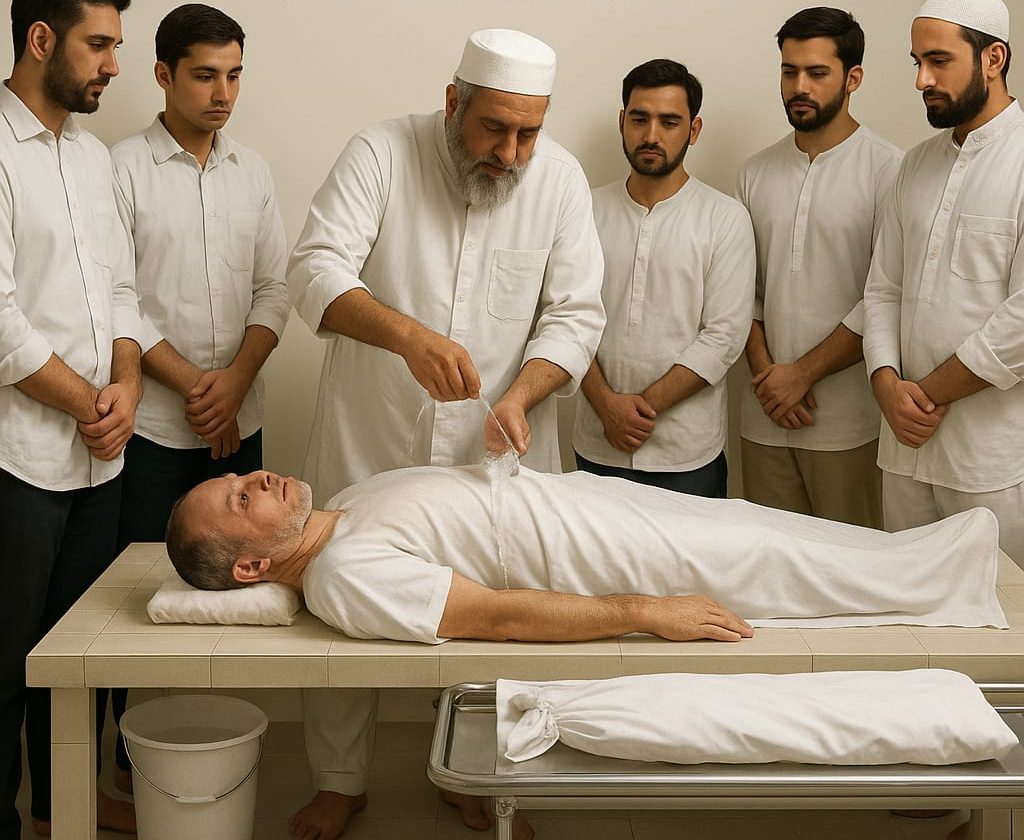
Step 1: Cover Awrah & Remove Clothes
پہلا مرحلہ
Carefully remove the deceased’s clothing while keeping the body covered with a clean cloth. The Awrah (private area) must remain covered throughout the entire Ghusl.
Step 2: Clean Private Parts
دوسرا مرحلہ
Using gloves or a clean cloth, gently clean the private parts of the deceased with water. If available, tissue or similar material may be used before washing with water.
Step 3: Perform Wudu
تیسرا مرحلہ
Perform Wudu for the deceased just as for Salah:
– Wash hands up to the wrists.
– Wipe mouth gently using wet cotton.
– Clean nostrils gently using wet cotton.
– Wash the face.
– Wash arms up to elbows.
– Wipe the head.
– Wash both feet.
– Wash hands up to the wrists.
– Wipe mouth gently using wet cotton.
– Clean nostrils gently using wet cotton.
– Wash the face.
– Wash arms up to elbows.
– Wipe the head.
– Wash both feet.
* Note: Water should not be poured forcefully into the mouth or nose.
Step 4: Wash the Entire Body
چوتھا مرحلہ
Begin washing from the right side, then the left side. Ensure that clean water reaches every part of the body. If soap or Sidr (Lote Tree Leaves) is available, it may be used. If not, clean water alone is sufficient.
Step 5: Repeat Washing (Odd Numbers)
پانچواں مرحلہ
The body should be washed thoroughly. If needed, the washing may be repeated until the body is properly cleaned. The Sunnah is to wash the deceased an odd number of times whenever necessary.
Step 6: Gently Dry the Body
چھٹا مرحلہ
After completing the Ghusl, gently dry the body with a clean towel or cloth. The deceased is now ready to be wrapped in the Kafan.
Transgender (Khuntha) Rulings
خنثیٰ (خواجہ سرا) کے احکام
Islamic rulings for transgender (Khuntha) individuals are based on Hanafi Islamic Jurisprudence:
- If a transgender person is medically and legally identified as closer to a male, the Ghusl, Kafan, and Janazah should be performed according to the rulings for a male.
- If identified as closer to a female, the Ghusl, Kafan, and Janazah should be performed according to the rulings for a female.
- If the gender cannot be determined (Khuntha Mushkil), then according to Hanafi rulings, Tayammum is performed instead of Ghusl.
Important Note / اہم نوٹ: The method of Ghusl described above applies equally to adult men, adult women, boys, and girls, while strictly maintaining Islamic guidelines regarding who should perform the washing.
Shrouding (Kafan)
تکفین / کفن کا طریقہ
After Ghusl is completed and the body is dried, the deceased is wrapped in a clean white Kafan according to the Sunnah and Hanafi Jurisprudence. White cloth is recommended for both men and women.

Male Kafan (مرد کا کفن)
Consists of 3 white sheets:
- Lifafah (Outer Sheet): Covers the entire body.
- Izar (Lower Wrapper): Head to feet.
- Qamees (Shirt): Upper body shirt.
Female Kafan (عورت کا کفن)
Consists of 5 pieces:
- Lifafah (Outer Sheet)
- Izar (Lower Wrapper)
- Qamees (Shirt)
- Head Cover (Khimar / اوڑھنی)
- Chest Cloth (Seenah Band / سینہ بند)
Kafan Wrapping Steps
- 1. Spread Lifafah, then Izar, then place Qamees on top.
- 2. Lay the deceased gently onto the Kafan.
- 3. Dress the deceased in the Qamees.
- 4. Apply Attar (fragrance) and camphor on prostration points if available.
- 5. Fold the Izar over the body, then fold the Lifafah.
- 6. Tie the Kafan loosely at the head, waist, and feet.
Important Note / اہم نوٹ: The method of Ghusl described above applies equally to adult men, adult women, boys, and girls, while strictly maintaining Islamic guidelines regarding who should perform the washing.
Janazah Prayer (Salat al-Janazah)
نمازِ جنازہ کا طریقہ
The Janazah Prayer is a Fard Kifayah (Collective Obligation). It contains no Ruku or Sujood, consisting of 4 Takbeers followed by Salam.
1st Takbeer — Thana (Sana)
پہلی تکبیر
Raise hands, say Allahu Akbar, fold hands and recite:
سُبْحَانَكَ اللَّهُمَّ وَبِحَمْدِكَ ، وَتَبَارَكَ اسْمُكَ ، وَتَعَالَى جَدُّكَ ، وَجَلَّ ثَنَاؤُكَ ، وَلاَ إِلَهَ غَيْرُكَ
2nd Takbeer — Durood Ibrahim
دوسری تکبیر
Say Allahu Akbar (without raising hands) and recite:
اللَّهُمَّ صَلِّ عَلَى مُحَمَّدٍ وَعَلَى آلِ مُحَمَّدٍ كَمَا صَلَّيْتَ عَلَى إِبْرَاهِيمَ وَعَلَى آلِ إِبْرَاهِيمَ إِنَّكَ حَمِيدٌ مَجِيدٌ
اللَّهُمَّ بَارِكْ عَلَى مُحَمَّدٍ وَعَلَى آلِ مُحَمَّدٍ كَمَا بَارَكْتَ عَلَى إِبْرَاهِيمَ وَعَلَى آلِ إِبْرَاهِيمَ إِنَّكَ حَمِيدٌ مَجِيدٌ
3rd Takbeer — Supplication for Deceased
تیسری تکبیر
Say Allahu Akbar (without raising hands) and recite the appropriate Dua:
For Adult Male / Female (بالغ مرد یا عورت):
اللَّهُمَّ اغْفِرْ لِحَيِّنَا وَمَيِّتِنَا وَشَاهِدِنَا وَغَائِبِنَا وَصَغِيرِنَا وَكَبِيرِنَا وَذَكَرِنَا وَأُنْثَانَا ، اللَّهُمَّ مَنْ أَحْيَيْتَهُ مِنَّا فَأَحْيِهِ عَلَى الإِسْلاَمِ ، وَمَنْ تَوَفَّيْتَهُ مِنَّا فَتَوَفَّهُ عَلَى الإِيمَانِ
For Minor Boy (نابالغ لڑکا):
اللَّهُمَّ اجْعَلْهُ لَنَا فَرَطًا وَاجْعَلْهُ لَنَا أَجْرًا وَذُخْرًا وَاجْعَلْهُ لَنَا شَافِعًا وَمُشَفَّعًا
For Minor Girl (نابالغ لڑکی):
اللَّهُمَّ اجْعَلْهَا لَنَا فَرَطًا وَاجْعَلْهَا لَنَا أَجْرًا وَذُخْرًا وَاجْعَلْهَا لَنَا شَافِعَةً وَمُشَفَّعَةً
4th Takbeer — Salam
چوتھی تکبیر
Say Allahu Akbar, pause briefly, then conclude by turning your head right and left for Salam.
السَّلاَمُ عَلَيْكُمْ وَرَحْمَةُ اللهِ
Our Funeral Services
ہماری خدمات
Karachi Funeral Service provides professional Islamic funeral arrangements guided by Hanafi Islamic Jurisprudence. Our trained personnel provide: